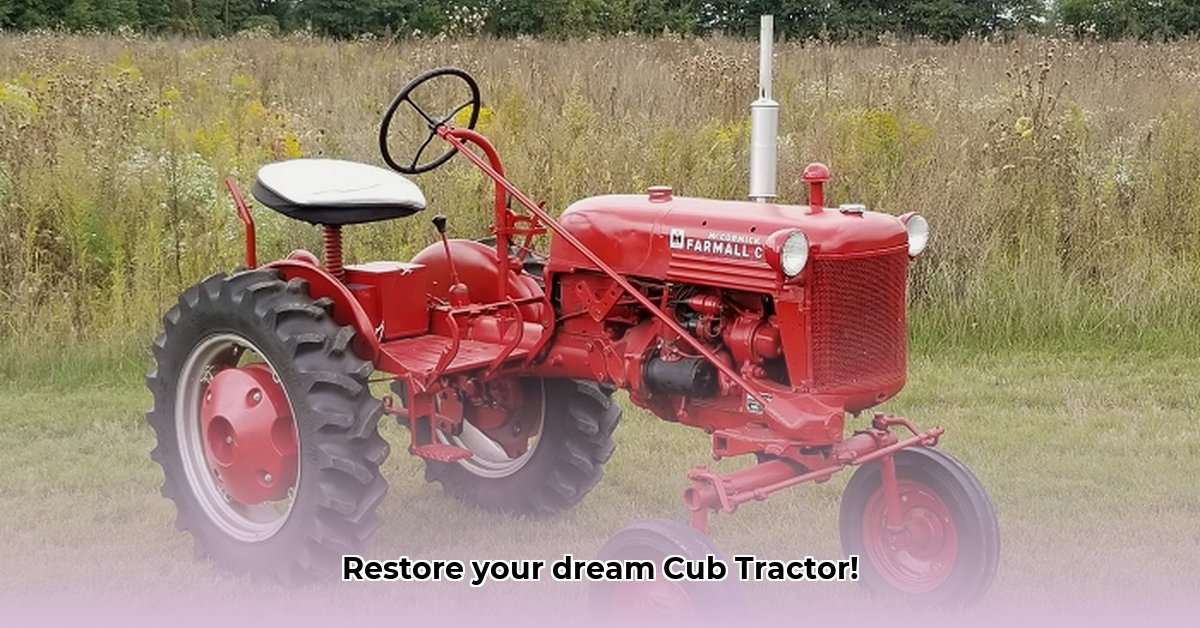
International Cub Tractor Market Overview
The vintage International Cub tractor market is thriving, offering a blend of agricultural history and rewarding restoration projects. Prices vary significantly, ranging from a few thousand dollars for a project tractor needing extensive work to tens of thousands for a meticulously restored model. Model-specific demand, parts availability, and overall condition heavily influence price. For example, certain models like the 8N are more sought-after due to their parts availability and ease of restoration, commanding higher prices than less common variants. A well-maintained tractor with readily available parts will fetch a premium. Conversely, tractors requiring significant repairs or with scarce parts will command significantly lower prices. The market is dynamic, so diligent research is paramount. Isn't it fascinating how much history affects a tractor's value? For additional resources, check out this helpful website: Kubota Tractor Info.
Buying Your International Cub Tractor: A Step-by-Step Guide
Acquiring a vintage International Cub tractor requires careful planning and due diligence. This comprehensive guide will lead you through the process.
Step 1: Researching Models
Before you even begin your search, research the various International Cub models. Each model possesses unique characteristics, affecting both functionality and value. Consider factors like engine size, features (e.g., three-point hitch), and parts availability. Online forums dedicated to vintage tractors (like the IH Cub Cadet forum) are invaluable resources. Understanding the nuances of each model empowers you to make an informed decision aligned with your needs and budget.
Step 2: Assessing Condition
A thorough pre-purchase inspection is critical. This involves a detailed examination of the tractor's key components:
- Engine: Check for leaks, compression, and overall wear. Listen for unusual noises during operation.
- Transmission: Verify smooth shifting and the absence of grinding or other irregularities.
- Hydraulics: Test the responsiveness of the hydraulic systems if equipped.
- Electrical System: Check the battery, wiring, and all electrical components. Understanding the grounding system (positive or negative) is also crucial, varying across models.
- Frame and Body: Look for signs of rust, damage, or previous repairs. A thorough inspection may reveal hidden problems.
Step 3: Evaluating Parts Availability
Parts availability is vital. Some models boast readily accessible parts, while others present unique challenges. Prioritize models with established parts networks to minimize restoration complications and costs. Online forums and specialized dealers are frequently excellent sources for locating hard-to-find parts. Have you ever had trouble finding a specific part for a vintage machine? It can significantly impact the restoration and overall cost.
Step 4: Negotiating Price
Negotiating requires informed decision-making. Research comparable sales in the market to establish a realistic price range. Consider the tractor's condition, model, and included implements when determining your offer. Don't be afraid to haggle, but always remain respectful and professional. What's the typical negotiation range for a vintage International Cub? This varies, but research helps make an accurate assessment.
Step 5: Transportation and Delivery
Transporting a vintage tractor requires specialized handling. Consider the vehicle's dimensions and weight. You'll likely need a trailer and potentially professional transportation services. Have you considered the logistical challenges of moving a heavy piece of machinery? Planning ahead is essential.
Selling Your International Cub Tractor: A Strategic Approach
Selling your International Cub demands strategic preparation and marketing.
Step 1: Preparing Your Tractor
Thoroughly clean your tractor, repair any necessary components, and meticulously document its condition with high-quality photos and a detailed description. High-resolution images showcasing details are crucial. A well-presented tractor significantly increases its appeal to potential buyers. Doesn't a well-maintained tractor just look better?
Step 2: Pricing Strategically
Research comparable sales to set a competitive yet realistic price. Pricing too low may undervalue your asset, while pricing too high could deter potential buyers. Pricing is a balance between maximizing profit and attracting potential buyers.
Step 3: Marketing Your Tractor
Utilize various platforms like online marketplaces and dedicated vintage tractor forums to reach a wide range of potential buyers. A comprehensive description highlighting the tractor's condition and features is essential.
Restoring Your International Cub Tractor: A Practical Guide
Restoring a vintage International Cub is a labor-intensive process demanding patience, expertise, and a phased approach. It involves disassembly, cleaning, repair, reassembly, and thorough testing. Each step requires meticulous attention to detail. Have you considered the challenges of sourcing parts and specialized tools? It is critical to plan ahead. Access to service manuals, specialized tools, and online forums like the IH Cub Cadet forum are invaluable resources for this process.
Conclusion: Due Diligence is Key
Buying or selling a vintage International Cub tractor involves diligent research, careful inspection, and strategic negotiation. This guide provides a framework for navigating this exciting market successfully. Remember, careful planning and thorough research save time, money, and potential headaches.